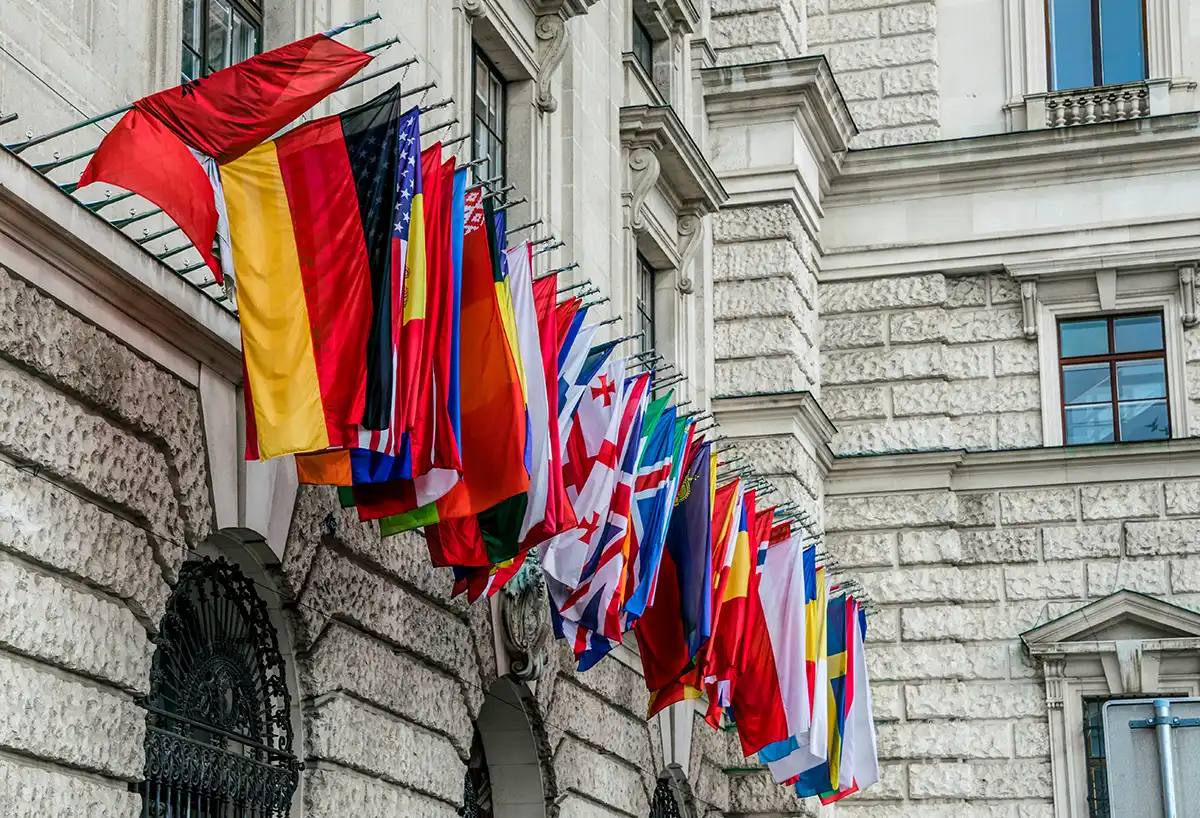
Canada's diplomatic service has a particular shape. Roughly 180 embassies, high commissions and consulates worldwide, run by Global Affairs Canada — a network that blends a G7 member's range with an Arctic state's regional focus, a francophonie commitment that few non-French foreign services share, and a development-cooperation tradition that runs through countries most G7 services treat as peripheral. Joining GAC as a Foreign Service Officer means accepting a working life of three- to four-year postings, decided largely by the institution, in countries that increasingly reflect Canada's strategic recalibration around the Indo-Pacific, the Arctic and Africa.
Most public attention on the diplomatic career fixates on the salary. That's understandable — the FS pay scale is public, and the word "ambassador" suggests a paycheck that matches the prestige. The reality is more layered. FS-01 and FS-02 entry pay is comfortable but unspectacular by Toronto, Calgary or Ottawa private-sector standards. The Foreign Service Directives — Canada's overseas-allowance system — change the picture significantly on certain postings. And the most interesting part of the compensation never appears on any GAC pay scale.
That gap between the public image and the actual answer is where this gets useful for anyone seriously thinking about a Canadian diplomatic career: what does a Canadian diplomat actually earn, and which postings genuinely shape a career?
What a Canadian diplomat actually earns
New entrants to Global Affairs Canada typically join at FS-01 — the Foreign Service Officer entry grade — at roughly CAD 80,000 to CAD 95,000 a year, depending on step. FS-02 (CAD 85,000 to CAD 100,000) and FS-03 (CAD 100,000 to CAD 120,000) cover the early-to-mid-career path. Solid public-service compensation; well below what an equivalent qualification might attract at a Bay Street firm or in technology, but with a stability and global scope private-sector roles rarely offer.
Career progression runs through FS-03 and FS-04, then into the EX (Executive) cadre for ambassadorial and head-of-mission appointments. Ambassador-level base salaries generally run from the upper hundreds of thousands depending on the post and EX level. What changes the picture, often dramatically, is the Foreign Service Directives — Canada's overseas-allowance system. Cost-of-living adjustments for expensive posts (London, Geneva, Tokyo), hardship allowances for difficult ones, education and dependent provisions, housing provided or subsidised, and language allowances for operationally demanding languages. On a hardship post, effective total compensation can approach double the base salary.
But the most interesting part of this compensation never shows up on any FS pay table. The real "pay" is structural: a working life across continents, family life often in three languages (English, French, plus the language of post), the access that comes from representing Canada in rooms where bilateral and multilateral decisions are made, and the long-tail value of having served in places that — given Canada's distinctive diplomatic identity around francophonie, Arctic policy, development cooperation and multilateralism — almost no other G7 service places officers in. That form of compensation explains, more than any FS grade, which postings inside GAC are quietly fought over.
- Strategic weight of the country for Canadian foreign-policy, security and economic interests
- Visibility from Ottawa — work read by the Minister or PCO accelerates a career
- Quality of life on post: housing, schools, climate, medical access and family fit
- Language alignment with Canada's bilingualism and francophonie commitments — French-language posts have a particular career resonance at GAC
- Hardship and security profile: harder posts attract Foreign Service Directives at the top of the scale and disproportionate career-shaping value

Which GAC postings get fought over rarely comes down to base pay alone. Mandate, representation, daily life and operational pressure carry far more weight.
LIGHTFIELD STUDIOS / Adobe Stock
China is among Canada's largest non-US trading partners and most politically intricate bilateral relationships — and Beijing is the embassy that lives inside that complexity daily.
The Canadian Embassy in Beijing runs what is, by quiet consensus inside GAC, one of Canada's most operationally demanding bilateral files. The trade relationship — agricultural exports, energy, automotive parts, education services — sits alongside a political file that has been reshaped by the Meng-Spavor-Kovrig episode, by the Five Eyes alignment on China policy, and by Canada's Indo-Pacific Strategy reorientation since 2022. The embassy is supported by Canadian consulates in Shanghai, Guangzhou, Chongqing and Hong Kong.
What makes Beijing demanding for a Canadian diplomat is the layering. Trade and consular work for hundreds of thousands of Chinese-Canadians and Canadians transiting China, the political file that requires constant calibration, surveillance pressure on diplomats, and the kind of work calendar that operates on Ottawa's clock and Beijing's clock at once. Mandarin proficiency carries a language allowance and a long-term career premium.
Inside GAC, Beijing is one of the most career-defining tours an officer can take. It is not a quality-of-life post — air quality, surveillance, restricted mobility — but the file weight and the visibility from Ottawa reshape what comes next more reliably than almost any other posting in the network.
Germany is among Canada's most consequential European interlocutors — and Berlin is the post inside GAC that has felt that shift most clearly since 2022.
The Canadian Embassy in Berlin runs the bilateral relationship with Canada's largest European trading partner and one of its most operationally important European partners. Germany has, since 2022, become a more central conversation for Canadian foreign policy — on Ukraine support and the rules-based-order file, on critical-minerals and energy cooperation (the Trudeau-Scholz hydrogen partnership and successors), on Indo-Pacific coordination among G7 partners, and on a deep transatlantic security file that runs alongside Canada's NATO commitments.
What makes Berlin distinctive for a GAC officer is the combination of substantive bilateral substance and European quality of life. Excellent schools, accessible medical care, a host society that is generally welcoming and culturally accessible to Canadian diplomatic families, and short reach to Brussels, Paris and Eastern Europe. For mid-career officers building a European profile, Berlin is a posting that compounds.
For a Canadian diplomatic career, a Berlin tour is the kind of European assignment that has gained — not lost — weight in the last decade. The G7 dimension, the NATO-and-Ukraine dimension, and the European leg of Canada's Indo-Pacific Strategy all route through this post.
India is the country whose diplomatic relationship with Canada has been most reshaped — by the diaspora, by trade negotiations, and by the recent bilateral tensions over the Nijjar file.
The Canadian High Commission in New Delhi runs a relationship that has changed shape faster than almost any other in the GAC network. The Canadian-Indian diaspora — one of the largest non-European diaspora communities in Canada — anchors a relationship that runs on people-to-people flows, education partnerships, and substantial economic ties. The 2023-2024 bilateral tensions over the Nijjar matter have added an operational dimension that no other Canadian mission has had to manage at this scale.
What makes a New Delhi tour distinctive professionally is the scale. India is the kind of country at which diplomats grow — the bilateral file rewards officers who can absorb large complexity, track multiple workstreams (economic, education, defence, technology, diaspora) at once, and represent Canada inside a political ecosystem that operates by different rules than the Canadian one. The work is demanding in ways that don't always make front-page news.
The fact that the mission carries the formal title of High Commission — the Commonwealth convention for diplomatic representation between member states — doesn't change the underlying reality. It functions for all practical career purposes as an embassy, and the work is among the most substantive in the network.
A small post by name-recognition, an outsized post by Canadian foreign-policy logic — Iceland is where Arctic policy and a substantive bilateral relationship intersect.
The Canadian Embassy in Reykjavik is one of those postings whose public profile sits well below its actual strategic importance for Canadian foreign policy. Iceland is a fellow Arctic Council state — a forum in which Canada has invested heavily over the past two decades — a NATO ally, a small but substantive trade partner, and a country whose bilateral relationship gives Canadian diplomats unusual access to North-Atlantic and Arctic policy conversations.
What Reykjavik offers, beyond the file, is one of the highest qualities of life of any GAC posting. A small walkable capital, clean air, intact natural environment, a host society that is genuinely welcoming to Canadian diplomats, and schools that work well for diplomatic families. For an officer building an Arctic or Northern-Atlantic profile, the posting has career value disproportionate to its size.
The trade-off — small post, modest visibility from Ottawa — is real. But within GAC, Arctic-focused careers increasingly include a Reykjavik tour, and the file weight of the Arctic Council in Canadian foreign policy makes this one of the quietly career-relevant posts in the network.
Mozambique is one of Canada's longest-standing African development partners — and Maputo is the High Commission that carries that tradition forward.
The Canadian High Commission in Maputo represents something that few other G7 foreign services carry forward at the same scale: a development-cooperation tradition that runs through countries the rest of the West sometimes treats as peripheral. Mozambique has been a Canadian development partner for decades — through CIDA, then Global Affairs Canada's international assistance programme — and the bilateral relationship runs on aid, education, health-sector cooperation, peace-and-security work, and a small but substantive trade relationship.
What makes a Maputo tour distinctive for a Canadian diplomat is the work. Few G7 missions of comparable size carry as much programmatic weight relative to staffing. The High Commission combines classic bilateral diplomatic representation with substantial development-programme oversight — feasibility, monitoring, partnership with multilateral agencies, civil society engagement — in a way that requires both diplomatic skill and operational toughness.
Postings like Maputo are not the conventional name-recognition assignments. But they shape Canadian diplomatic careers in ways that few European or US-based tours can. They produce officers who understand how Canada's distinctive identity — as a middle-power development-cooperation partner — actually works on the ground, and that experience compounds across the rest of a career.
Embassy, high commission, consulate and honorary consulate are not the same career experience
Anyone considering Global Affairs Canada should understand the difference between embassy, high commission, consulate and honorary consulate postings. Embassies and high commissions are operationally similar — the high-commission title is the Commonwealth convention for diplomatic representation between member states. On the GAC career path the work is comparable. Consulates focus on consular operations and regional engagement under a Consul-General. Honorary consulates are part-time appointments, typically held by a private citizen of the host country, and are not part of the GAC career path.
What changes with the type of mission is the work, the leadership responsibility, and the visibility from Ottawa. An ambassadorial role at a major embassy combines political representation, the management of all sections of the mission, and direct interlocution with the host government. Heads of consular operations at a Consul-General level run citizen services and regional engagement — a different but equally substantive leadership track.
For anyone moving from general interest into concrete career planning, the page on the diplomatic career is a useful next stop.
Global Affairs Canada
The official GAC site on Canada.ca. Bilateral relationships, Canadian embassies and high commissions worldwide, consular services, and the foreign-policy priorities that shape what a posting means.
Foreign Service Development Program — Canada.ca
Official GAC programme description for the Foreign Service Development Program — the main entry route into a Canadian diplomatic career, with eligibility, pay step at FS-01 entry, and the progression to FS-02 and beyond.
Treasury Board of Canada — FS Group Pay Scale
Authoritative reference on FS Group pay rates and progression. The official Treasury Board page covers the negotiated FS pay scale, applicable allowances, and Foreign Service Directives.
Public Service Commission of Canada — GC Jobs
The federal government's recruitment portal. Active and archived GAC Foreign Service postings, current selection processes for new entrants, and the technical entry requirements.
“The real compensation in a Canadian diplomatic career doesn't appear on any FS pay table. It shows up in the places you've lived, the relationships you've built, and the question of which postings GAC officers actually compete for inside the service when the salary stops being the criterion.”
If the criterion is the most operationally complex bilateral file Canada manages, Beijing is the clearest case in this selection. If it's the European G7 partner that has grown in weight most quickly, Berlin earns its place. If it's the relationship that has been most reshaped by diaspora, trade and political pressure, New Delhi is the post that captures the change. If it's Arctic-policy weight paired with exceptional liveability, Reykjavik has a gravity disproportionate to its size. And if it's the development-cooperation strand that makes the Canadian diplomatic identity distinctive among G7 services, Maputo is the post this article cannot leave out.
Read this way, the question that started this article — what does a Canadian ambassador earn — turns out to be the wrong frame. The right question is which postings a GAC officer would actually fight for inside the service if pay scale weren't the criterion. The real compensation in this career is not the monthly base; it's the sum of the places lived, the relationships built, and the rooms where, for a few years at a time, a Canadian diplomat was the voice of Canada.